Posts

Contrast-enhanced Ultrasound in Children

Image
Researchers from the United Kingdom analyzed adverse incidents encountered in pediatric  CEUS , and sought to determine if there were financial benefits to reducing the number of CT and MRI examinations among children. The researchers analyzed all CEUS examinations performed on children aged 18 and younger between January 2008 and December 2015. The children received a median dose of 2.4 mL of a  sulfur hexafluoride microbubble  contrast agent, with ranges from 0.1 mL to 4.8 mL. All immediate reactions deemed due to contrast examinations were documented in radiology reports. Electronic patient records were examined for adverse reactions within 24 hours not due to an underlying pathologic condition. Costs were also compared: CEUS utilization cost at $94, CT at $168, and MRI at $274. The results showed that of 187 boys and 118 girls (305 children total), 147 studies (48.2%) were ordered to characterize liver lesions and 113 studies (37.1%) for trauma. The remaining 45...

Are e-cigarette flavorings toxic to the heart

Image
Arteriosclerosis, Thrombosis, and Vascular Biology  conclude that the chemicals used to create these flavors could be damaging blood vessels and the cells that line the inside of the heart. Electronic cigarettes  (e-cigarettes) were first introduced to the United States in 2006 and were marketed as a safer alternative to cigarettes. These battery-powered devices heat a liquid solution that is then inhaled by the user. However, e-cigarettes can still contain nicotine and some of the chemicals used in regular cigarettes. Since their introduction, they have gained popularity and are widely used as an alternative to smoking traditional tobacco products. They are often used to help people quit smoking with the belief being that they offer fewer health risks. They have also gained popularity among young people. According to the Centers for Disease Control and Prevention ( CDC ), there was an increase in middle and high school students using e-cigarettes...

Global Large Bore Vascular Closure System Market 2018

Image
QYResearch recently announces a latest research report titled  “ Effective Market Analysis of Global Large Bore Vascular Closure System Industry 2018 ”  which highlights the Large Bore Vascular Closure System market size, comprehensive Large  Bore Vascular Closure System  industry dynamics and high-tech updates of global Large Bore Vascular Closure System market with respect to Large Bore Vascular Closure System industry opportunities, threats, challenges, constraints, cost structure and current trends in the Large Bore Vascular Closure System industry. This Large Bore Vascular Closure System research guide consist of top Large Bore Vascular Closure System manufacturers, Large Bore Vascular Closure System market segmentation by Types, Application and Large Bore Vascular Closure System market division based on geographical locations. The Large Bore Vascular Closure System research report primarily focuses on providing in-depth Large Bore Vascular Closure System rese...

Smoking, Diabetes Can Increase Risk Of Dementia; Dementia Risk Factors You Must Know

Image
Smoking is one heinous habit which is responsible for a number of health hazards. Similarly, diabetes is a  chronic  condition which can affect the quality of life of a person to a great extent. The two have been popular to increase risks of cancer and heart disease. Now, researchers have warned that the two can clog the region of brain which is crucial to memory and increase risk for  dementia . Some recent findings have shown that smoking and diabetes can increase risk of  calcification  (calcium salt deposits) in hippocampus – a brain structure which is important for short and long-term memory storage. Any decline in the functioning of hippocampus can cause  Alzheimer’s disease , which is the most common kind of dementia. The study, which was published in  journal Radiology , found out the association between  cardiovascular  risk factors such as smoking, diabetes, high blood pressure and hippocampal calcifications. Around 1,991 peop...

Varicose veins may increase risk of blood clots, lead to vascular diseases

Image
Adults with varicose veins - gnarled, enlarged veins, most commonly appearing in the legs and feet - may be at increased risk of suffering from blood clot that could lead to vascular diseases, a study has found. The study found people with varicose veins were at a five times increased risk of developing a deep venous thrombosis (DVT) -- a clot in the legs which can lead to amputation or even death, the Daily Mail reported. They were twice as likely to develop a pulmonary embolism -- a clot which travels into the lungs and can be deadly.They also had double the risk of peripheral arterial disease, which reduces blood flow to the arms and legs. The study led by researchers including Pei-Chun Chen, adoctoral student from China Medical University in Taiwan, examined 212,984 patients aged 20 years and older with varicose veins, and a control group of equal patients without varicose veins. The results, published in the journal JAMA, showed that among adults diagnosed with varicose ...

Cannabinoids exert a neuroprotective effect on the cognitive deficits caused by vascular dementia

Image
“Vascular dementia ( VaD ) is characteristic of chronic brain ischemia and progressive memory decline, which has a high incidence in the elderly”, states the study. “However, there are no effective treatments for VaD, and the underlying mechanism of its pathogenesis remains unclear.” With that in mind, “This study investigated the effects of a synthetic  cannabinoid  receptor agonist WIN55,212-2 ( WIN ) on VaD, and molecular mechanisms of the effects.” Using a variety of tests conducted on rat models, it was found that  WIN55,212-2  – which is meant to mimic the effects of natural, cannabis-derived cannabinoids – “decreased the expression of Capase-3, and improved the learning and memory impairment of VaD rats.” Researchers state that “These data indicate that WIN exerts a neuroprotective effect on the cognitive deficits of VaD rats, which may be associated with the suppression of excessive  autophagy  and inflammation.”

Corindus Vascular Robotics Inc. (DE) (CVRS)

Image
Corindus Vascular Robotics Inc. (DE) ( CVRS )  had a good day on the market for Tuesday June 26 as shares jumped 17.73% to close at $0.86. About 2.83 million shares traded hands on 5,699 trades for the day, compared with an average daily volume of 1.2 million shares out of a total float of 188.79 million. After opening the trading day at $0.75, shares of Corindus Vascular Robotics Inc. (DE) stayed within a range of $0.89 to $0.73. Corindus Vascular  Robotics Inc. (DE) is also a component of the Russell 2000. The Russell 2000 is one of the leading indices tracking small-cap companies in the United States. It’s maintained by  Russell  Investments, an industry leader in creating and maintaining indices, and consists of the smallest 2000 stocks from the broader Russell 3000 index. Russell’s indices differ from traditional indices like the Dow Jones Industrial Average (DJIA) or S&P 500, whose members are selected by the committee because they base membership ent...

Heart risk calculator due for an update

Image
Over 11 million Americans are at high risk of having a heart attack or  stroke  in the next 10 years — at least, that’s what the numbers say. The equation doctors use to estimate  cardiovascular  risk is prone to miscalculation, according to a new study, meaning patients may be popping daily aspirin or statins at the wrong dosage. The stakes are higher for African-Americans. With the old equation, 1 in 29 African-Americans may be incorrectly labeled very low or very high risk, according to the study. For example, a 46-year-old black man was estimated to have a 40 percent lower chance of having a heart attack or stroke than a white man of the same age and in identical health. In general, African-Americans are at higher risk of cardiovascular conditions than Caucasians, so miscalculations shouldn’t be taken lightly. The heart risk calculator transforms patient information — age, gender, race,  cholesterol  levels, blood pressure, prescriptions, a...

Outdated equations lead to incorrect prescriptions for cardiovascular conditions

Image
I recently learned that clinicians in the United States typically calculate this risk using a website or smartphone calculator based on equations approved by the federal government. Those numbers are also built into many electronic health records, so a patient’s risk is automatically calculated during an office visit. But the datasets used to come up with those calculations are decades old — some dating as far back as 70 years. That could leave as many as 11 million Americans at risk of taking the wrong dose of aspirin, statins and blood pressure medications, new research in the  Annals of Internal Medicine  suggests. “A lot has changed in terms of diets, environments and medical treatment since the 1940s,” Stanford primary care physician and  epidemiologist  Sanjay Basu, MD, senior author of the study, said in a Stanford Medicine press release. “So, relying on our grandparents’ data to make our treatment choices is probably not th...

Global Cardiovascular Information System Sales market

Image
This report on the Global  Cardiovascular  Information System Sales market has been released by Questale with the aim to document the market trends of the Global Cardiovascular Information System Sales market. All key market updates, as well as technological updates, will be enlisted in this report. This report will provide a detailed assessment of majorly on the product overview, sales revenue, main players/suppliers along with the profiles and sales data, and marketing strategy analysis that directly affect the growth rate and revenue of products of Global Cardiovascular Information System Sales market. This report will be a valuable assessment for new startups who wish to enter the Global Cardiovascular Information System Sales market, as it will not just provide the current market trends but also predict the future trends. It will help them to  cautiously  select their genres so that they can have an equal footing to compete with global giants who have an end...

Corindus Vascular Robotics Inc. (DE) (CVRS) Moves Higher on Volume Spike

Image
Corindus Vascular Robotics Inc. (DE) (CVRS) traded on unusually high volume on Jun. 21, as the stock gained 1.19% to close at $0.77. On the day, Corindus Vascular Robotics Inc. (DE) saw 2.03 million shares trade hands on 6,903 trades. Considering that the stock averages only a daily volume of 1.3 million shares a day over the last month, this represents a pretty significant bump in volume over the norm. Generally speaking, when a stock experiences a sudden spike in trading volume, it may be seen as a bullish signal for investors. An increase in volume means more market awareness for the company, potentially setting up a more meaningful move in stock price. The added volume also provides a level of support and stability for price advances. Corindus Vascular Robotics Inc is engaged in the design, manufacture, and sale of precision vascular robotic-assisted systems for use in interventionalvascular procedures the CorPath System. Its product includes the CorPath 200 and CorPath GRX...

Vitamin D-3 could ‘reverse’ damage to heart

Image
By probing the effect that vitamin D-3 has on the cells that make up the lining of blood vessels, scientists at Ohio University in Athens, OH, have identified for the first time the role that the “sunshine vitamin” plays in preserving  cardiovascular  health. In a paper published in the International Journal of  Nanomedicine , they describe how they used nanosensors and a cell model to identify the molecular mechanisms that vitamin D-3 can trigger in the  endothelium , which is the thin layer of tissue that lines blood vessels. It was previously believed that the endothelium served no other purpose than to act as an inert “wrapper” of the vascular system, allowing both water and electrolytes to pass in and out of the bloodstream. However, advances over the past 30 years have revealed that the endothelium acts more like an organ that lines the whole of the circulatory system from the “heart to the smallest capillaries,” and who...

Blood transfusion during surgery boosts risk of venous thromboembolism

Image
Red blood cell (RBC) transfusions during surgery are associated with double the risk of venous  thromboembolism  (VTE) over the ensuing 30 days, researchers reported in JAMA Surgery. Investigators analyzed more than 750,000 patients undergoing surgery from a registry containing 525 North American hospitals. A total of 6.3 percent of the patients received perioperative RBC transfusions, defined as a transfusion from 72 hours before to 72 hours after surgery. These patients experienced VTE at a rate 2.1 times higher than those who didn’t undergo transfusions, even after adjustment for patient characteristics, surgical complexity and hospital length of stay. However, only 0.8 percent of patients in the study experienced postoperative VTE, a combination of  pulmonary  embolism and deep vein thrombosis. “Transfused RBCs have been proposed to modulate the inflammatory cascade,” wrote lead author Ruchika Goel, MD, MPH, with New York Presbyterian Hospital and We...

Peripheral Vascular Disease dangerous for the heart

Image
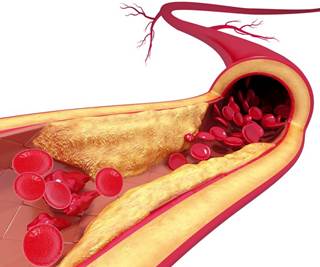
Peripheral Vascular Disease is a serious condition that often reveals itself through pain in the legs or other extremities. Often called  Peripheral  Artery Disease or Peripheral  Arterial  Disease (PAD), it is the result of arteriosclerosis or restricted blood flow caused by a buildup of plaque on the inner walls of the  arteries . When the flow of blood is limited, limbs, the heart and brain are  deprived  of the oxygen. Additionally, muscle cells in the wall of the artery overgrow and fat and calcium build up within these irregular spaces. Bleeding into the artery wall can also occur resulting in formation of a clot, which narrows the opening of the blood vessel even further.

Doctors found the unexpected cause of vascular diseases

Image
A group of Danish scientists- cardiologists  from the University of Copenhagen came to the conclusion that the likelihood of early death from problems with the blood vessels for men is doubled if they lead a solitary existence. The results of their study they presented at the EuroHeartCare Congress in 2018 in Dublin. Many experts believe that loneliness in terms of the risk of such illnesses as coronary heart disease and stroke even more dangerous in its effects than obesity. Danish researchers have added to this conclusion that loneliness can also increase the likelihood of other cardiac disorders such as  ischemia , atrial fibrillation. Preliminary research, incidentally, also showed that loneliness can be a factor of premature death. Data showed: people without relatives, family and loved ones often die several years earlier than their peers, sharing your life with someone else. “Loneliness and at the same time affects the health in itself, and leads to the fact tha...

Elevated Blood Pressure at Age 50 Tied to Dementia Later

Image
Blood pressure in midlife that was higher than normal — but below the threshold used to treat  hypertension  in some countries — was linked to increased risk of developing dementia later in life, an analysis of the long-running Whitehall II study found. Men and women who had a systolic blood pressure ≥130 mm Hg at age 50 had a 45% greater risk of developing dementia than people with a lower systolic blood pressure at the same age, reported Archana Singh-Manoux, PhD, of the French National Institute of Health and Medical Research (INSERM) in Paris, and colleagues in  European Heart Journal. This association was not seen at ages 60 or 70. “Our analysis suggests that the importance of midlife hypertension on brain health is due to the duration of exposure,” Singh-Manoux said in a statement. “So we see an increased risk for people with raised blood pressure at age 50, but not 60 or 70, because those with hypertension at age 50 are likely to be exposed to thi...

5EU Surgical Cardiovascular and Peripheral Vascular Procedures Volumes to 2021

Image
This report presents procedure volumes forecasts for some of the most common  cardiovascular  and peripheral vascular surgical procedures performed in the five EU countries of  France ,  Germany ,  Italy ,  Spain , and the UK (5EU). The forecast period covered by this report is for the years 2016 through 2021. This report also presents an overview of the etiology and  epidemiology  of selected cardiovascular and  peripheral  vascular diseases/disorders, prevailing surgical approaches/techniques, and evolving procedural utilization trends. Cardiovascular surgical procedures discussed include cardiac resynchronization therapy, congenital heart defect repair, coronary artery bypass graft surgery, implantation of implantable  cardioverter  defibrillators, pacemakers, and ventricular-assist devices, heart valve repair/replacement, percutaneous coronary intervention with or without stenting,  thrombectomy /thrombolysis, an...

Buerger’s Disease, a chronic, inflammatory, obstructing tobacco-associated vasculopathy, can lead to tissue loss and major amputations of limbs.

Image
Buerger’s disease is a condition wherein the blood flow to the arteries is restricted due to the constant use of tobacco. Continuous smoking leads to peripheral vascular disease, loss of tissue and in major cases, amputations of the limbs explains vascular surgeon Dr S. Bala Kumar. Buerger’s disease is chronic, inflammatory, obstructing tobacco-associated vasculopathy found in small and medium-sized arteries. It is largely found in young smokers. The flow of blood supply to the arteries and adjacent nerves is affected due to constant use of tobacco products like cigarettes, cigars and beedis. Acute cases of Buerger’s disease result in tissue loss and major amputations of limbs. The incidence in India is between 77 per cent in males and 11 to 23 per cent in females. The median age of diagnosis is 34 years. This disease is a relatively common cause of peripheral vascular disease in young people and a cause of disability in patients of all ages. It manifests with decreased blood...

Inflammation key to atherosclerosis—but more drug testing needed

Image
Therapies targeting cholesterol and inflammation have both shown the ability to reduce  cardiovascular  events among patients with atherosclerosis, but more evidence is needed before anti-inflammatory drugs gain widespread use similar to statins, according to a consensus statement published May 14 in the European Journal of Preventive Cardiology. The statement—authored by the European Society of Cardiology’s working group on atherosclerosis and  vascular biology —was catalyzed by the results of the recently published CANTOS trial. This study showed the anti-inflammatory drug canakinumab cut the risk of subsequent cardiac events in heart attack survivors, even when LDL cholesterol levels weren’t significantly lowered. “Although the results of the CANTOS trial can be considered a milestone in cardiovascular medicine, canakinumab prescription for patients with cardiovascular risk to improve their prognosis needs to overcome certain hurdles,” wrote t...

Medical imaging technology detects vascular disorders, injuries in brain without invasive contrast agents

Image
researchers have developed an analytical imaging technology based on functional MRI for detecting and monitoring cerebral vascular disorders and injuries that does not require the use of contrast agents. The new imaging method focuses on tracking an intrinsic blood-related MRI signal, which has been shown to travel with the blood. The signal is used as a natural biomarker to assess blood flow in a patient. “We can compare the signal from symmetric arteries and veins in both hemispheres or neck to assess the cerebrovascular integrity or the balance of blood flow,” said Yunjie Tong, an assistant professor in Purdue’s Weldon School of Biomedical Engineering, who developed the technology along with Blaise Frederick, a biophysicist and associate professor at Harvard Medical School. “The blood flow should be symmetric between the two sides in a healthy subject.” The time delay between the intrinsic signals from the internal carotid artery and the internal jugular vein represents the...